 467 Vanderbilt Ave, Brooklyn, NY 11238
 Mon-Fri 8AM - 6PM.

How Childcare Centers Support Emotional Development?
In the earliest years of childhood there’s this kind of constant emotional unwrapping. kids seem to figure out how to show happiness, irritation, fear, anticipation, disappointment, and affection, even before they truly grasp what those feelings mean. At this point supportive spaces are basically essential, because emotional development affects how children talk to others, form connections, manage challenges and react to pressure later on in life.
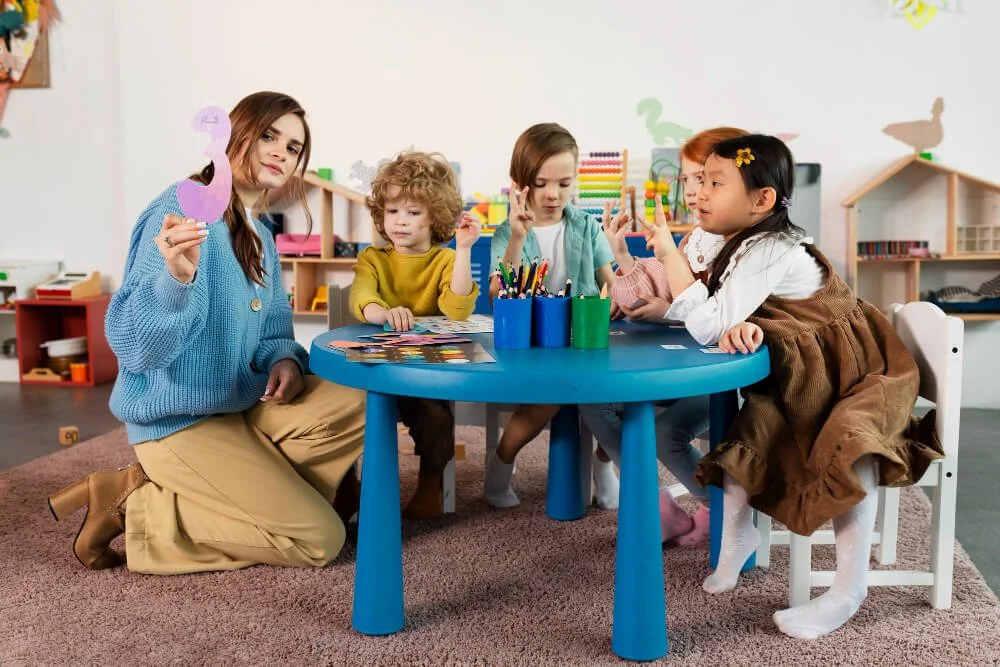
High quality childcare centers do much more than just supervise children during the day. They help shape emotional wellbeing in a kind of gentle way, mostly through nurturing relationships, structured rhythms or daily routines, plus social interaction. Along the way they also offer supportive learning experiences that feel connected rather than random. In modern early childhood education, emotional growth is now seen as a core part of healthy child development, not some secondary skill tucked away in the margins.
Today parents are increasingly searching for learning spaces that are not just structured, but also emotionally supportive, so kids can feel safe, sure of themselves, and more socially tied in. This really shows up for families exploring childcare centers in Brooklyn, since the communities there are diverse and schedules can be pretty relentless. In that kind of day-to-day rhythm, dependable emotional support systems matter a lot for young children, even when everyone is running around a bit.
Research continues to show that children who get real emotional backing early on in life tend to grow up with better communication abilities, stronger coping power (resilience), healthier friendships, and even more solid academic readiness further along. Their feelings and growth really are tied into how a child handles success, not only inside the classroom but also beyond it in everyday situations.
We will explore how daycare centers in Brooklyn and other early learning spaces, help with emotional growth. Also, why that kind of development really matters during childhood, not just in the moment. We will also explain how caregivers and educators do their part to help kids form those long-term emotional abilities, the kind that stick around and stay useful.
Why Emotional Development Matters in Early Childhood?
Emotional development is mostly about how a child can take in, explain, and handle their feelings while also making good and steady connections with other people. It starts pretty early, from infancy and then it keeps changing as the child grows through childhood, like it doesn’t just stop at some point.
Young children are constantly learning:
how to react to situations,
how to communicate emotions,
how to trust others,
and how to cope with challenges.
The emotional experiences children have in their early year’s kind of ripple into the way their brain develops, their behavior patterns, and also their social confidence. Research suggests that emotionally secure kids tend to be more adaptable, more cooperative, more empathetic, and honestly just better set-up for upcoming learning environments.
Strong emotional development helps children:
form healthy friendships,
communicate effectively,
handle frustration,
build self-confidence,
and develop independence.
Without proper emotional support, children may struggle with social interaction, emotional regulation, or confidence-building later in life.
That is why emotionally attuned childcare centers in Brooklyn are getting more and more important for families who want a more balanced early childhood education experience, like not just academic growth but also steady support.
The Role of Childcare Centers in Emotional Growth
Children spend a big amount of their day in childcare environments, so really caregivers and educators end up doing a lot of the work when it comes to how emotions get felt and learned in those first years. Because of that, what they do, how they respond, and even the small tone in their voice can quietly steer a child’s emotional experiences.
Quality childcare centers create spaces where children feel:
safe,
respected,
heard,
and emotionally supported.
Emotional development in childcare settings happens by itself, through the day-to-day routines, play and these little moments of communication, plus social interactions. Kids tend to pick up emotional skills not from big lectures or anything, but from steady experiences, and the relationships around them. Sometimes it feels less planned, more like everything quietly connects, even when adults think they’re just going through the motions.
Supportive early learning environments encourage children to:
recognize emotions,
develop empathy,
express feelings appropriately,
and build trust with others.
The emotional guidance children receive in early education settings often becomes the foundation for long-term emotional resilience.
Building Secure Relationships with Caregivers
One of the most important ways childcare centers in Brooklyn support emotional development is by having secure caregiver, child relationships, even if it sounds basic at first but it really matters.
Young kids really need dependable grownups that respond in a calm, consistent and caring way. When caregivers show patience and emotional responsiveness, children start to feel secure and almost like it’s okay to be themselves, and they can share how they feel in an open manner.
Secure relationships help children:
build trust,
develop confidence,
feel emotionally protected,
and explore new experiences without fear.
For example, when a child feels anxious around drop-off, emotionally attuned educators offer comfort and reassurance, not just wave it off or dismiss those emotions. After a while, kids start to understand that feelings are manageable, and pretty much temporary as well.
Children who feel emotionally secure are more likely to:
participate in activities,
communicate openly,
engage socially,
and adapt to new environments.
Good caregiver connections also help lower separation anxiety and emotional strain, mostly when a child first moves into childcare, even if it feels like a big transition.
Teaching Children to Recognize Emotions
Young children often experience strong emotions before they have the vocabulary to describe them. Emotional learning starts the moment children are gently taught how to recognize, and put a name to, what they are feeling.
High-quality childcare centers actively support emotional awareness through everyday interaction.
Educators help children recognize emotions such as:
happiness,
anger,
frustration,
excitement,
sadness,
fear,
and disappointment.
This learning process often happens through storytelling, classroom discussions, facial expression activities, and guided conversations.
For example, teachers may ask:
“How do you think that made your friend feel?”
“Can you tell me why you feel upset?”
“What can help you feel calm again?”
These conversations encourage emotional awareness while helping children understand that feelings are a normal part of life.
A lot of childcare centers in Brooklyn also use visual learning instruments like emotion charts, or social emotional learning activities, so kids can share feelings with more confidence. Sometimes they even guide children through small routines, that help them name what they feel, and how to respond, without it sounding too formal.
As children improve emotional recognition, they become better at:
communicating needs,
understanding others,
and managing emotional reactions.
Emotional Regulation and Self-Control
One of the most valuable emotional skills children learn in childcare is emotional regulation.
Emotional regulation refers to the ability to:
calm down after frustration,
manage impulses,
wait patiently,
and respond appropriately during stressful situations.
Young children naturally struggle with self-control, because their emotional regulation skills are still slowly developing, kind of. Supportive educators guide them through emotional experiences, rather than just correcting behavior without any explanation.
For example, rather than saying:“Stop crying.”
A caregiver may say:“I know you’re upset because you wanted another turn. Let’s figure this out together.”
This approach validates emotions while teaching children healthier responses.
Quality childcare centers in Brooklyn understand that emotional coaching is more effective than punishment-based discipline. Children gradually learn:
problem-solving,
patience,
emotional expression,
and coping strategies.
These skills become essential as children grow older and face more complex social situations.
Structured Routines Create Emotional Security
Children thrive in environments where they know what to expect. Predictable routines help reduce stress and create emotional stability.
Most quality childcare centers maintain structured daily schedules that include:
arrival routines,
meals,
playtime,
learning activities,
outdoor time,
rest periods,
and transitions.
Consistent routines help children feel emotionally secure because they provide a sense of order and familiarity.
Children who understand daily expectations often feel:
calmer,
more confident,
and more independent.
Transitions are also easier when educators prepare children in advance for schedule changes or upcoming activities.
A lot of parents looking around for childcare centers in Brooklyn tend to prefer programs that keep a steady routine because emotional stability, honestly, has a huge role in the healthy growth of a child. When the day feels predictable it’s easier for them to settle, to adapt, and just feel more safe.
Social Interaction Supports Emotional Learning
Children learn many emotional skills through interaction with peers.
Group childcare environments provide opportunities for children to practice:
sharing,
cooperation,
communication,
empathy,
and conflict resolution.
Daily peer interaction teaches children how to navigate social relationships in healthy ways.
For example, children learn:
how to take turns,
how to apologize,
how to express needs respectfully,
and how to resolve disagreements.
These experiences help children build emotional intelligence naturally through real-life situations.
Developing Empathy Through Peer Relationships
Empathy is the ability to understand and care about the feelings of others.
In emotionally supportive childcare centers, educators help children recognize how their actions affect peers.
When a child sees another child upset, educators may guide the interaction by asking:
“What happened?”
“How do you think they feel?”
“What can we do to help?”
Over time, children begin recognizing emotional cues independently and responding compassionately.
Empathy development during early childhood contributes to:
healthier friendships,
reduced aggression,
stronger communication,
and better social confidence.
A lot of families in Brooklyn pick childcare centers that really push programs with kindness, emotional awareness and a sort of cooperative learning, kind of vibe. They say it helps kids understand feelings a bit more, and play nicer together.
Conflict Resolution Skills in Childcare
Conflict is a natural part of childhood. Arguments over toys, space, or attention happen frequently during early learning years.
Emotionally supportive educators use those kinds of moments as chances to teach kids those valuable emotional skills, in a kind of gentle way.
Rather than immediately solving every disagreement, caregivers guide children toward respectful communication and problem-solving.
Children learn how to:
listen to others,
express frustration verbally,
compromise,
and find solutions together.
These experiences strengthen:
emotional resilience,
self-confidence,
and social understanding.
Learning conflict resolution early helps children develop healthier communication patterns later in life.
The Importance of Play in Emotional Development
Play is one of the most effective tools for emotional learning during childhood.
Children express thoughts, emotions, fears, and social understanding naturally through play experiences.
Quality childcare centers in Brooklyn often use play-based learning to support emotional growth because it allows children to process experiences in safe and creative ways.
Imaginative Play and Emotional Expression
Pretend play gives children opportunities to explore emotions and relationships.
Activities such as:
playing family,
pretending to be doctors,
caring for dolls,
or creating imaginary scenarios
Allow children to express emotions they may not yet fully understand verbally.
Educators observe these interactions carefully because pretend play often reveals emotional experiences children are processing internally.
Imaginative play supports:
empathy,
communication,
creativity,
and emotional understanding.
Outdoor Play and Emotional Well-Being
Outdoor play also contributes significantly to emotional health.
Physical activity helps children:
release stress,
improve mood,
develop confidence,
and strengthen social interaction.
Outdoor environments encourage exploration, independence, and cooperative play while reducing emotional tension.
Many childcare centers in Brooklyn prioritize outdoor learning spaces because movement and sensory experiences support both emotional and cognitive development.
Positive Communication Builds Emotional Confidence
Children learn emotional behavior by observing how adults communicate with them.
Supportive educators use respectful and encouraging language that helps children feel valued and understood.
Positive communication includes:
active listening,
calm guidance,
emotional validation,
and constructive feedback.
Children who consistently experience respectful communication often develop:
stronger self-esteem,
healthier emotional expression,
and greater confidence in social settings.
When caregivers respond patiently during emotional moments, children learn that feelings can be expressed safely and appropriately.
Encouraging Independence and Self-Confidence
Emotional development is closely connected to confidence-building.
Children feel emotionally empowered when they are encouraged to complete tasks independently and make age-appropriate decisions.
Quality childcare centers help children develop confidence by allowing them to:
choose activities,
solve small problems,
participate in classroom responsibilities,
and practice decision-making.
Simple accomplishments such as cleaning up toys, helping classmates, or completing routines independently strengthen self-esteem over time.
Children who feel capable and trusted are more likely to:
take initiative,
communicate openly,
and adapt confidently to new situations.
Supporting Children Through Emotional Transitions
Transitions can be emotionally difficult for young children.
Starting childcare, moving into a new classroom, or separating from parents may create anxiety or uncertainty.
Supportive childcare centers in Brooklyn help children navigate transitions through:
gradual adjustment periods,
familiar routines,
caregiver consistency,
parent communication,
and emotional reassurance.
These strategies reduce emotional stress while helping children adapt more comfortably to new environments.
Emotionally supportive transitions are especially important during early childhood because children are still developing coping skills.
The Role of Educators in Emotional Development
Educators influence emotional growth every day through their interactions, responses, and classroom environments.
Emotionally responsive caregivers:
observe emotional needs,
provide reassurance,
model respectful behavior,
and teach coping strategies.
Children often mirror adult emotional behavior. When educators remain calm, empathetic, and patient during challenging situations, children gradually learn to respond similarly.
Many parents evaluating childcare centers in Brooklyn pay close attention to teacher-child interaction because emotionally responsive educators have a lasting impact on children’s well-being.
Family Collaboration Strengthens Emotional Support
Children benefit most when families and childcare providers work together consistently.
Strong parent-teacher communication helps create emotional consistency between home and childcare environments.
Many qualities childcare centers support family involvement through:
daily progress updates,
parent meetings,
emotional development discussions,
and collaborative guidance strategies.
When caregivers and parents share similar emotional support approaches, children often feel more secure and understood.
This partnership also helps educators better understand each child’s emotional needs, personality, and communication style.
Emotional Development and School Readiness
Emotional skills play a major role in preparing children for school success.
Children who can:
manage emotions,
follow routines,
communicate needs,
cooperate with peers,
and handle frustration
often transition into structured school environments more successfully.
Emotional readiness supports:
classroom participation,
focus,
social interaction,
and learning engagement.
This is one reason many families seek childcare centers in Brooklyn that emphasize social-emotional learning alongside academic preparation.
Children who feel emotionally secure are generally more confident learners.
Signs of Emotionally Supportive Childcare Centers
Parents searching for emotionally supportive childcare environments should look for programs that:
encourage respectful communication,
prioritize emotional safety,
maintain predictable routines,
support social interaction,
and use positive discipline strategies.
Emotionally healthy environments should feel warm, welcoming, and supportive rather than overly strict or emotionally dismissive.
Educators should actively help children navigate emotions instead of focusing only on behavior correction.
Long-Term Benefits of Emotional Support in Childcare
The emotional skills children develop during early childhood often influence future well-being for years to come.
Children who receive strong emotional support early are more likely to:
build healthy relationships,
develop resilience,
communicate effectively,
adapt to challenges,
and maintain stronger self-confidence.
Supportive early learning experiences can positively affect both emotional growth and school progress as children move through childhood and even adolescence.
This is why emotionally focused childcare centers in Brooklyn continue to play an increasingly important role in modern early childhood education.
Conclusion
Emotional development forms the foundation for how children communicate, handle stress, connect with other people, and also figure out who they are. In those early years, kids should be in settings that are supportive, a kind of place where they can feel safe, feel appreciated, and stay emotionally secure, more or less all the time.
High-quality childcare center can support a child’s emotional growth by offering warm caregiver relationships, a sort of dependable daily rhythm, regular social interaction, and play based learning that feels kind of natural. Along with that, positive communication matters a lot, because it gives kids clear cues and a safe space to understand big feelings. In the end, these moments help children build emotional awareness, grow resilience, learn empathy, and develop confidence that keeps paying off over and over again throughout life.
For families looking for emotionally supportive childcare in Brooklyn, picking a steady, caring environment can create a lasting effect on a child’s social, emotional, and academic journey. Emotional development isn’t only some extra perk from childcare, it is more like one of the key bedrocks for long term growth and overall well-being.
